

Know your xIoT risk.
Eliminate the unknowns.
State of xIoT
Vulnerability assessment
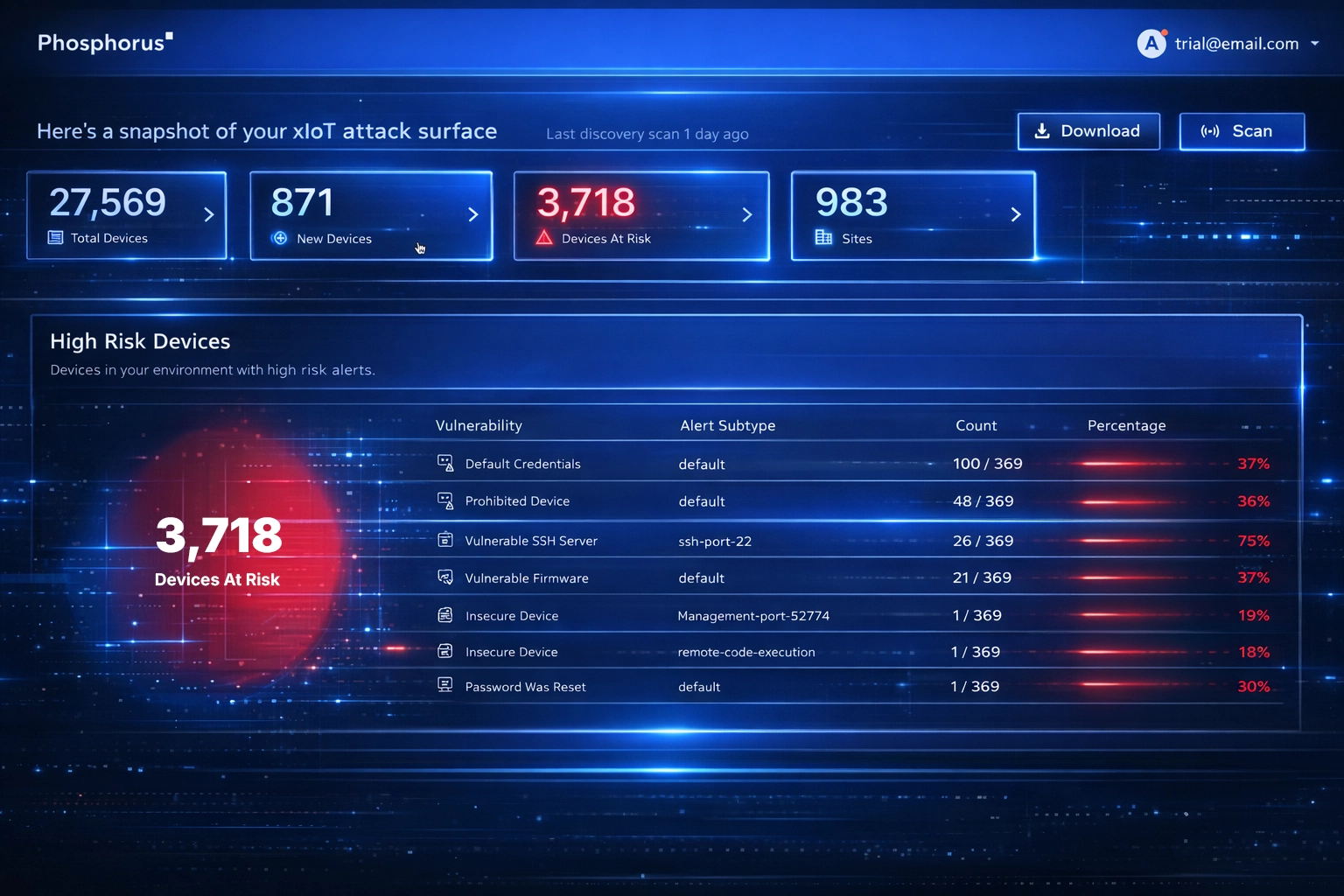
Assess xIoT estates for password, firmware, certificate, configuration, and device state vulnerabilities automatically at-scale.
Real-world example

Ransomware targets Healthcare organizations
In 2024, nearly 400 U.S. healthcare organizations reported incidents linked to ransomware operators like LockBit 3.0, ALPHV/BlackCat and BianLian1
State of vulnerability assessment:

Attacks are accelerating
Over 820,000 IoT attacks per day were observed in 2025 — a 46% increase year-over-year. Threat actors are actively targeting connected devices at unprecedented scale.2
Unknown devices.
Unmanaged risk.
Unmanaged and misconfigured xIoT devices create security blind spots. Default credentials, outdated firmware, and poor hygiene make them easy entry points for attackers.

Breaches are costly
According to Forrester, 34% of IoT breaches result in $5–10M in losses — significantly higher than typical IT incidents due to operational disruption and downtime.3
The Phosphorus solution
Vulnerability assessment must go beyond surface scanning
01
Deep xIoT risk intelligence
02
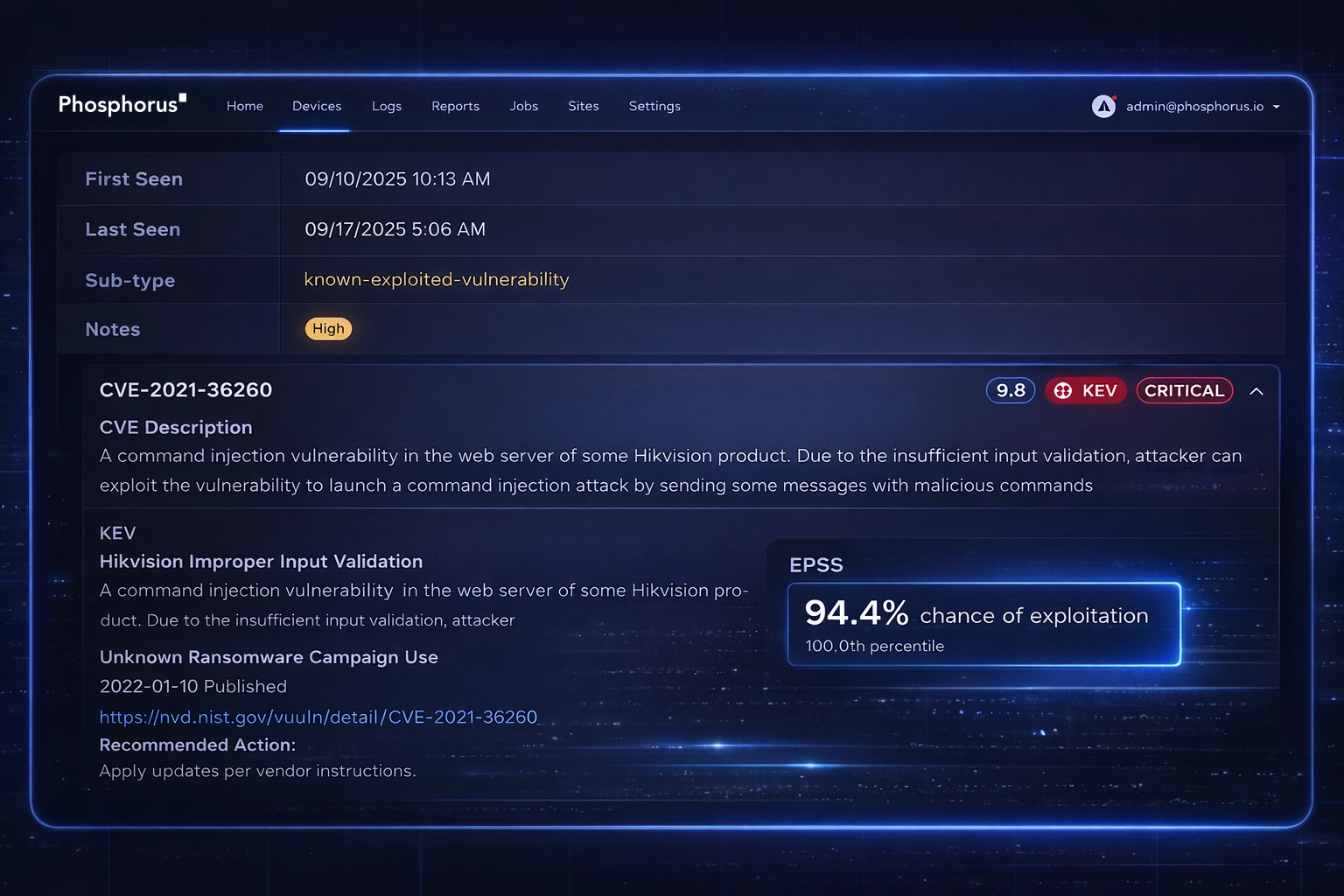
Exploit-aware vulnerability prioritization
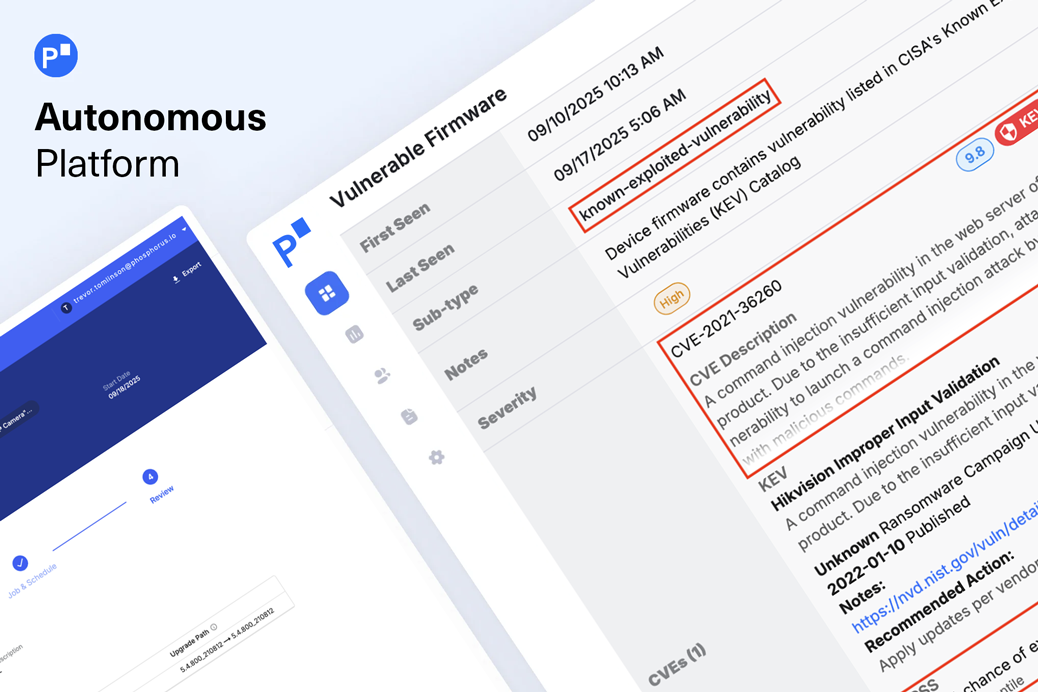
Not all vulnerabilities pose equal risk. Enrich CVEs with intelligence from CISA’s Known Exploited Vulnerabilities (KEV) catalog and FIRST’s Exploit Prediction Scoring System (EPSS) to prioritize remediation based on real-world exploit likelihood, not just severity scores.
03
Compliance-ready reporting built in
Simplify regulatory alignment with built-in reporting mapped to NIST 800-53, NIST 800-82, IEC 62443, NERC CIP, HIPAA, NDAA Section 889, NIS2, and OTCC. Generate audit-ready documentation while maintaining operational visibility.

Not all vulnerability assessment is equal
From static CVE lists to exploit-aware risk intelligence
VULNERABILITY INSIGHTS
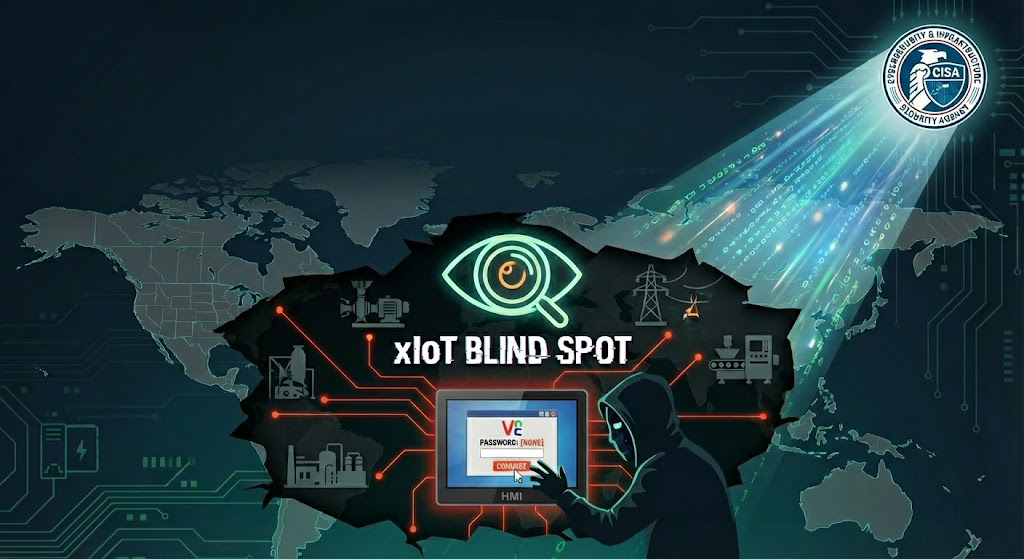
Latest on xIoT vulnerability assessment

Frequently asked questions
xIoT vulnerability assessment
Platform Overview
Visit phosphorus.io to:
• Request a demo
• See the platform in action
Phosphorus can discover and classify devices in minutes, not months, and does not require agents, hardware, or network changes. Organizations gain immediate visibility and can begin remediation almost immediately after deployment.
No. Phosphorus is agentless and does not require SPAN ports, taps, or additional hardware. It can be deployed on-premises, in the cloud, or in hybrid environments with minimal setup.
Discovery
Phosphorus currently delivers 96% precision for customers on average.
It delivers high-fidelity, device-level accuracy because it:
• Communicates directly with devices
• Collects real attributes (not inferred data)
• Profiles devices using firmware, services, and protocols
This avoids the inaccuracies common in:
• MAC address lookups
• Passive traffic analysis
Risk Remediation
Phosphorus provides deep risk visibility, including:
• Default or weak credentials
• Outdated or vulnerable firmware with CVE, KEV, and EPSS context
• Expired or self-signed certificates
• Insecure configurations and open ports
• End-of-life or unsupported devices
Banned or high-risk devices, including those restricted by NDAA Section 889
Yes. Phosphorus enables direct, automated remediation across xIoT devices, including:
• Password rotation and credential enforcement
• Firmware upgrades and downgrades
• Certificate replacement and renewal
•Configuration hardening, such as disabling Telnet or FTP
These actions can be executed at scale across thousands of devices with minimal operational impact.
Compliance & Zero Trust
Yes. Phosphorus identifies devices from restricted manufacturers, including those disguised through OEMs, white-labeling, and even unlabeled devices, and enables organizations to isolate or remediate them. This supports compliance with regulations such as NDAA Section 889.
Are you ready to see
Phosphorus in action?
Request a demo to learn how we can help you eliminate the xIoT security gap with the only IoT, OT, and IoMT discovery and remediation platform.