Limited visibility
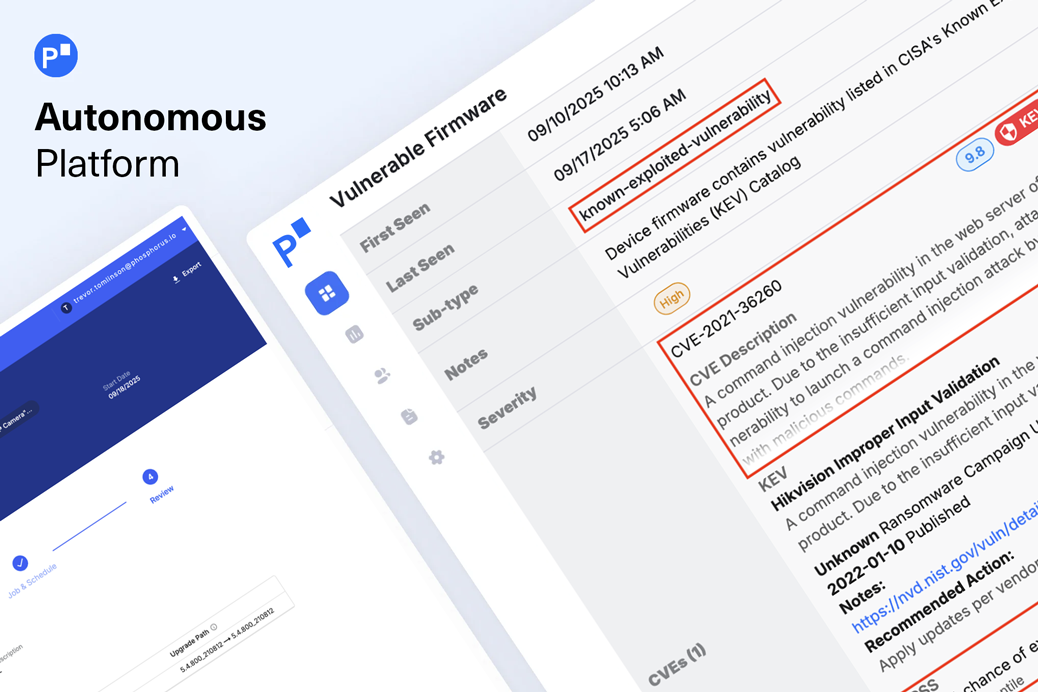
Firmware versions are often unknown or incomplete across devices
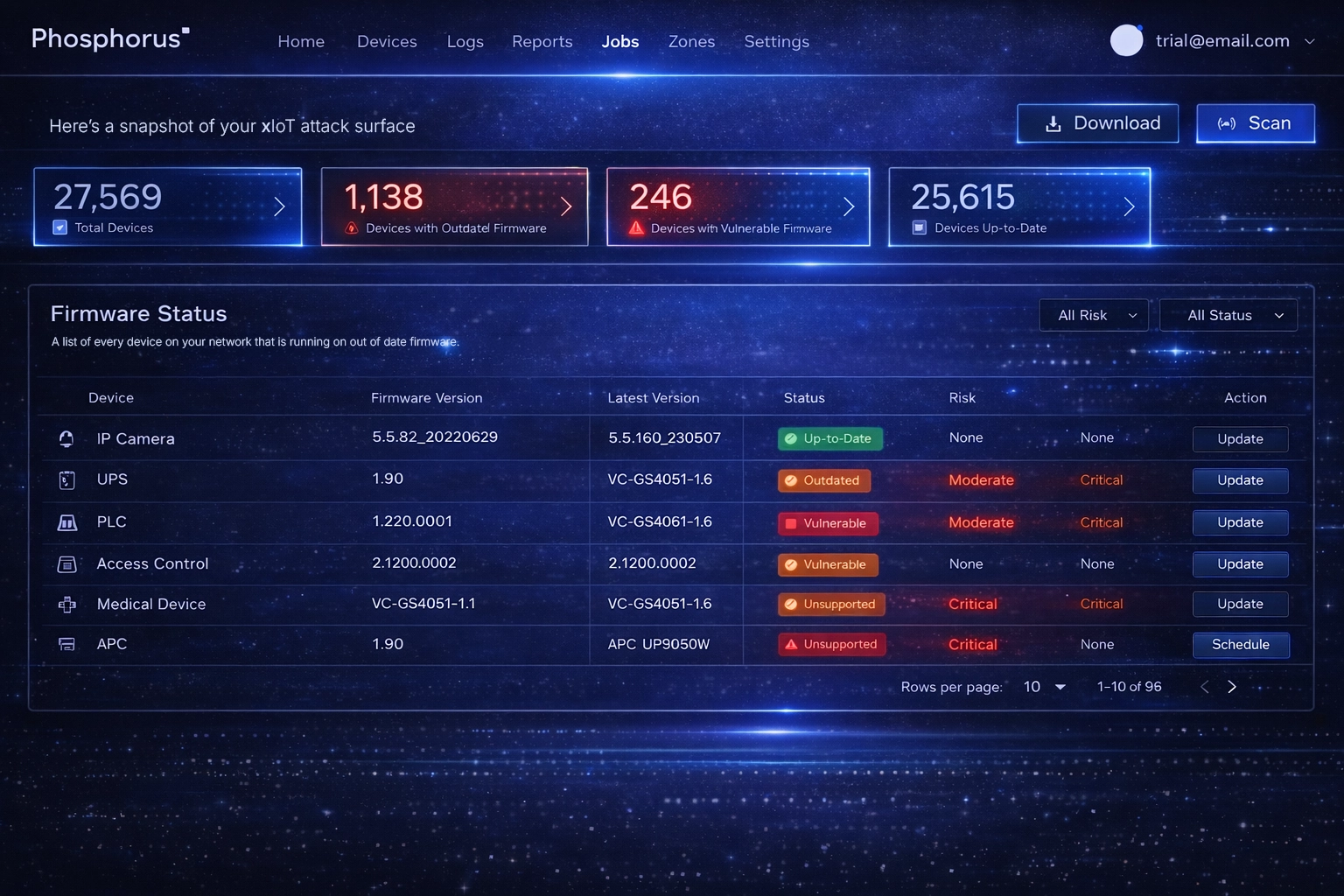
Full firmware visibility
Continuously identify firmware versions, risks, and exposure across all xIoT devices.
Manual patching
Firmware updates require manual effort and device-by-device intervention
Automated updates
Execute upgrades and downgrades across thousands of devices automatically
No exploit context
Vulnerabilities lack prioritization based on real-world risk
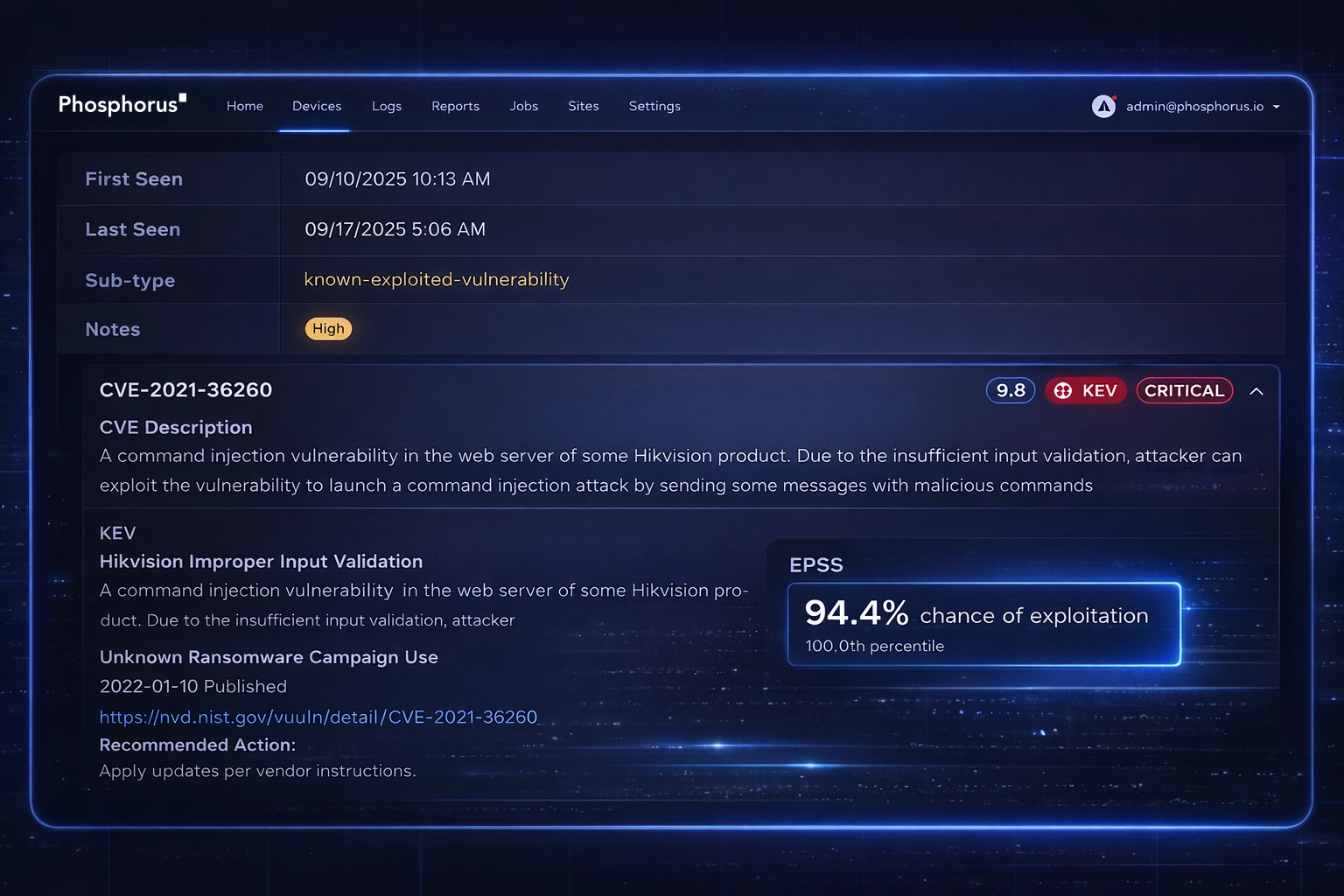
Risk-based prioritization
Leverage KEV and EPSS to focus on actively exploited firmware vulnerabilities
Operational disruption
Updates can cause downtime or impact critical systems
Safe execution
Perform updates with rollback support and no disruption to operations
Fragmented tooling
Multiple tools are needed to manage firmware across environments
Unified platform
Manage firmware across IoT, OT, and IoMT from a single platform
No policy control
Firmware updates are inconsistent and lack governance
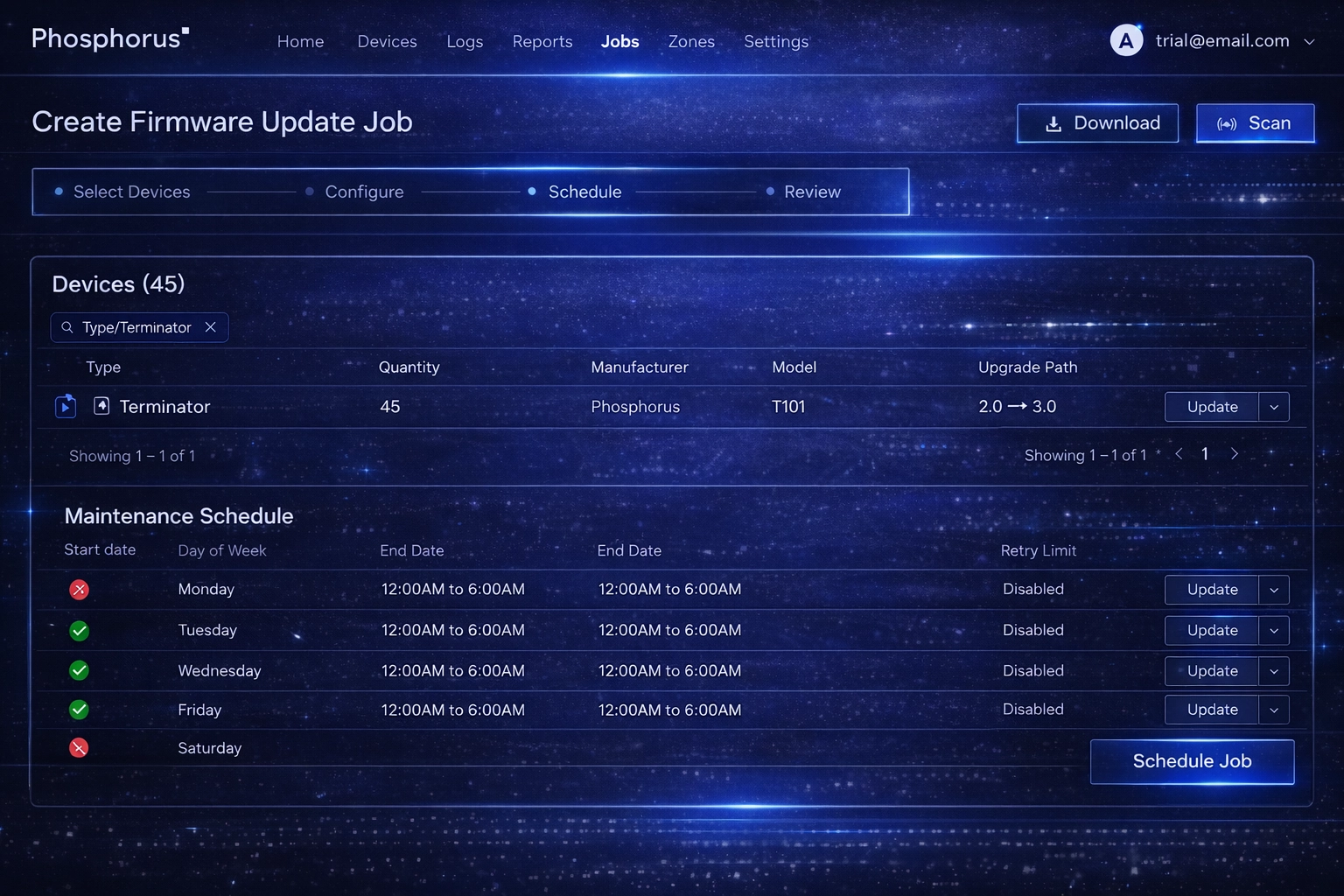
Policy-driven control
Enforce standardized, scheduled firmware updates across all devices