Chat with us

Eliminate default passwords.
Enforce password standards.

Automatically remove default credentials, enforce secure password rotation, and centralize access governance on all xIoT devices through granular policies.

State of xIoT

Credential hygiene remains a critical exposure gap

0%
About 70% of xIoT devices still use factory-default passwords!
70%
Default credentials remain the primary attack vector for xIoT compromise and lateral movement.

Real-world example

Pho_CERT_Polska_Energy_Sector_Incident_Report

Default passwords enabled coordinated attack on Polish energy infrastructure

On 29 December 2025, coordinated cyberattacks in Poland hit renewable energy sites, a manufacturing company, and a CHP plant serving nearly 500,000 people.1

State of credential hygiene:

Default credentials persist

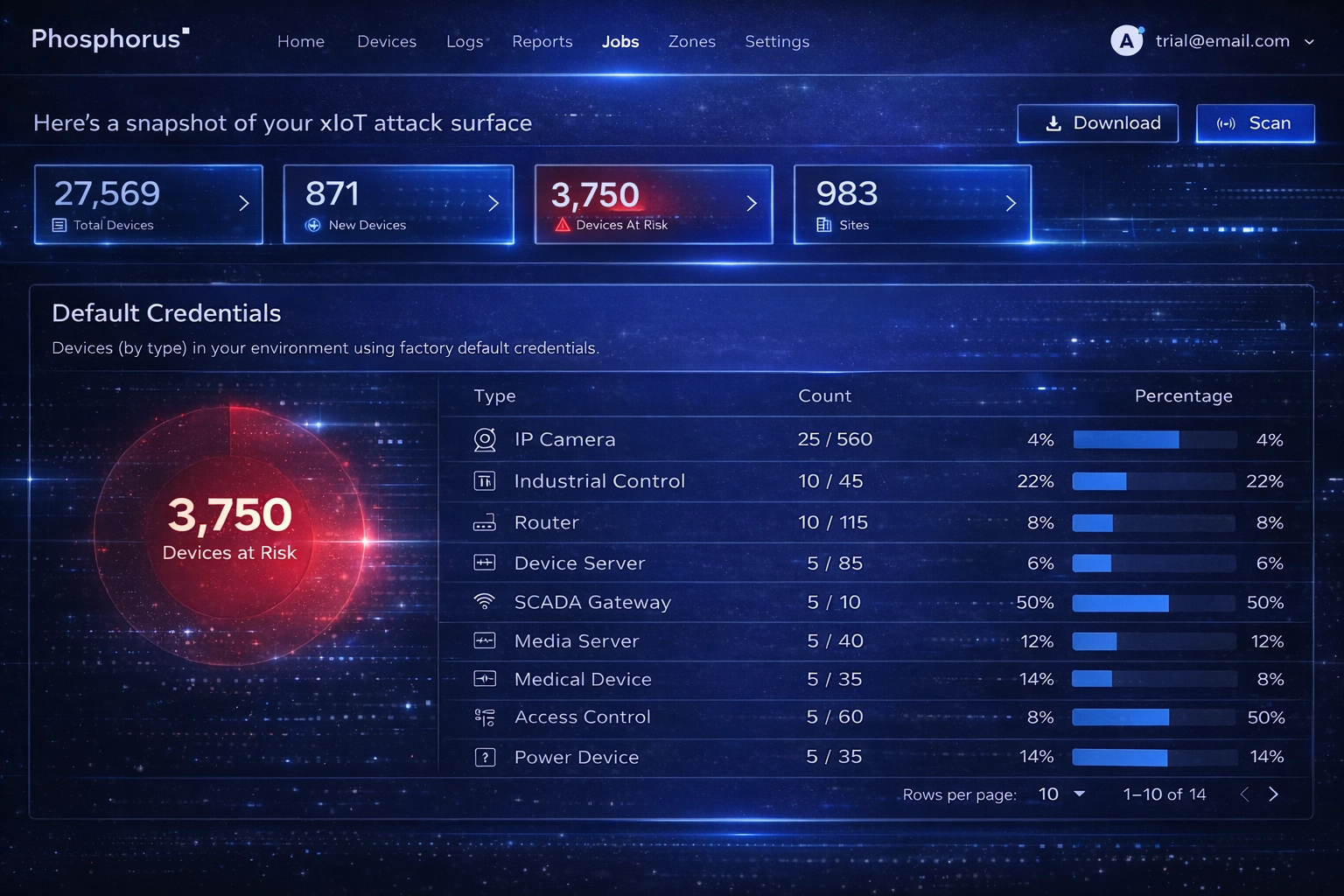
70% of xIoT devices still use factory-default passwords, leaving environments vulnerable to trivial compromise.

Convenience creates risk

Third-party contractors and distributed teams often leave credentials unchanged for ease of deployment.

Traditional PAM tools fall short

Legacy secrets management solutions were not designed for heterogeneous xIoT environments.

The Phosphorus solution

Automated xIoT password rotation at enterprise scale

01

Eliminate default credentials

Automatically detect and replace factory-default and weak xIoT passwords across your environment with strong ones. Close one of the most common and easily exploited attack vectors across thousands of devices within minutes.
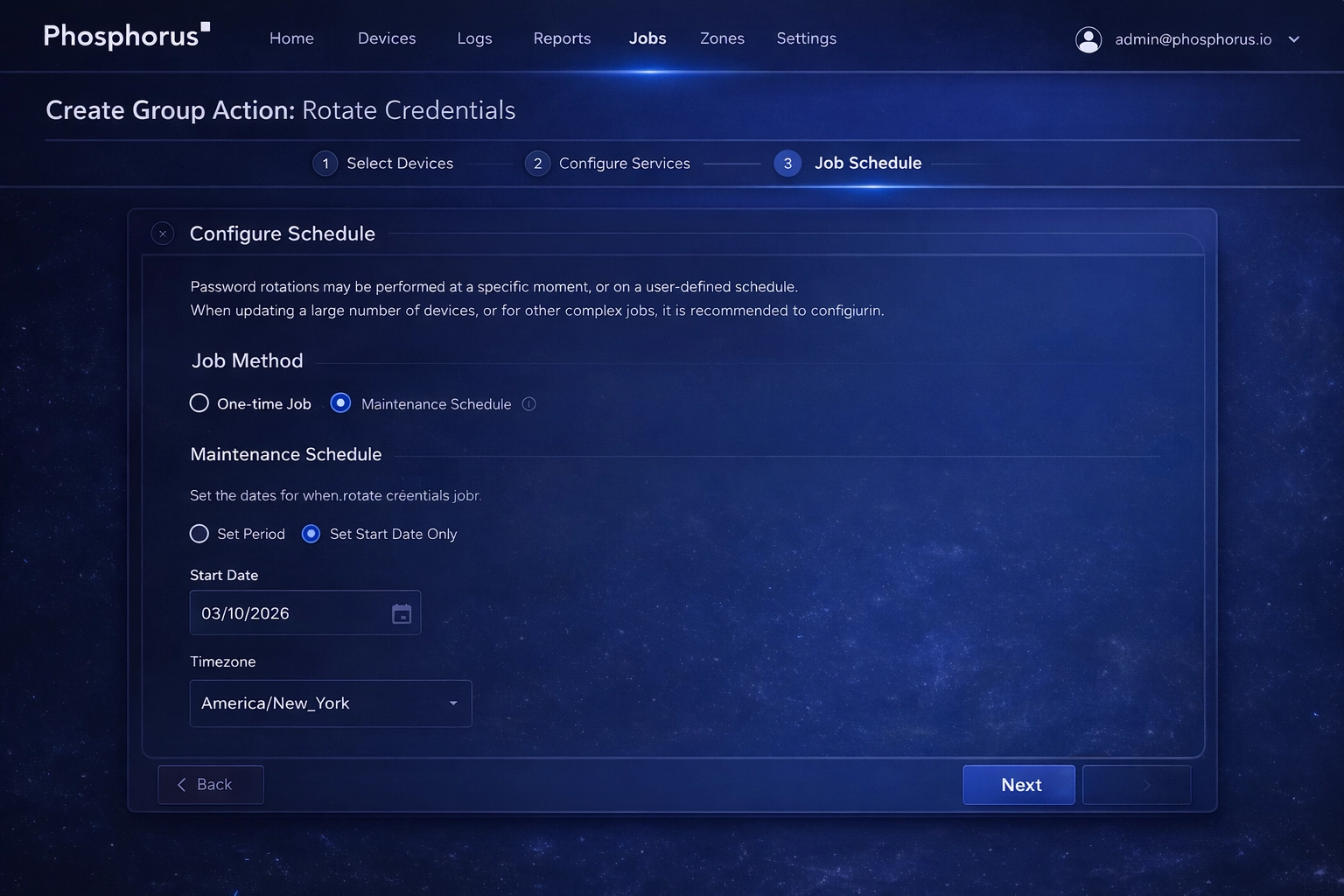
Phosphorus dashboard
Rotate Credentials Job Schedule

02

Policy-driven password rotation

Enforce policy-driven password standards across diverse device types and automatically rotate credentials at defined intervals, ensuring consistent security without impacting production systems or workflows.

03

Centralized credential governance

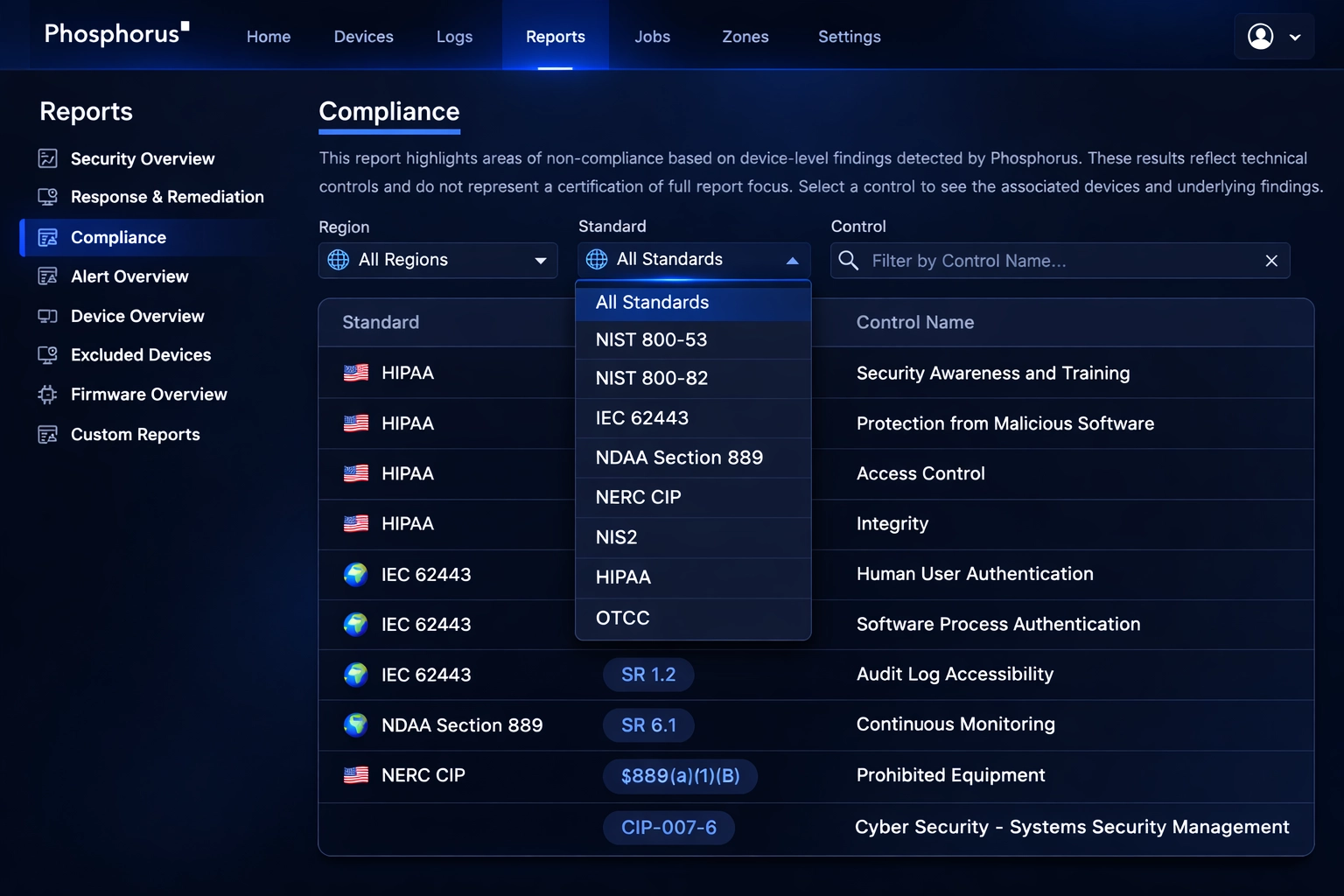
Gain full visibility into credential posture across your entire xIoT estate while extending privileged access management best practices to connected devices. Monitor rotation history, enforce password standards, and apply centralized controls and auditing to ensure device credentials align with internal policies and regulatory requirements.
Phosphorus dark compliance dashboard

Not all password management is equal

From manual credential changes to automated xIoT credential governance

Traditional password management
Phosphorus xIoT password management
Manual resets Passwords changed device-by-device through manual processes
Automated rotation Secure credential updates executed at scale
IT-centric tooling Designed for servers and endpoints, not xIoT devices
xIoT-native automation Device-aware credential management across all device types and vendors
Limited visibility No centralized view of default or weak credentials
Unified credential visibility Real-time insight into password posture across all connected devices
Operational disruption risk Changes often require downtime or maintenance windows
Non-disruptive updates Rotation performed safely within operational constraints
IT-centric Privileged Access Management (PAM) Limited to IT devices
Extend PAM to xIoT environments Leverage existing vaults for credential management and storage

Sources

Frequently asked questions

Password management

No FAQs matched your search. Try a different keyword or topic.

Platform Overview

0

Risk Remediation

0

Phosphorus automatically detects and replaces default or weak credentials across devices. It enforces password policies, schedules rotations, and securely stores credentials in an embedded vault, reducing one of the most common attack vectors in xIoT environments.

Are you ready to see
Phosphorus in action?

Request a demo to learn how we can help you eliminate the xIoT security gap with the only IoT, OT, and IoMT discovery and remediation platform.