Complete xIoT visibility.
No guesswork. No disruption.

Actively discover, classify, and profile every xIoT device with high-resolution context — using direct, device-native communication.

State of xIoT

The asset inventory problem

0%
About 30% of xIoT devices previously unknown
30%

Lack of high-resolution, actionable inventory undermines ownership, segmentation, compliance, and vulnerability management.

Real-world example

U.S. government agencies lack complete IoT inventories

A GAO review found several federal agencies could not complete required IoT asset inventories, indicating unknown devices on their networks.1

State of asset inventory hygiene:

Passive discovery lacks device context

OUI and traffic analysis don’t provide firmware, model precision, or device state.

Authorization ambiguity

Managed, unmanaged, rogue, transient, orphaned.

Segmentation failures

Unauthorized xIoT devices discovered in production VLANs.

Regulatory & country-of-origin blind spots

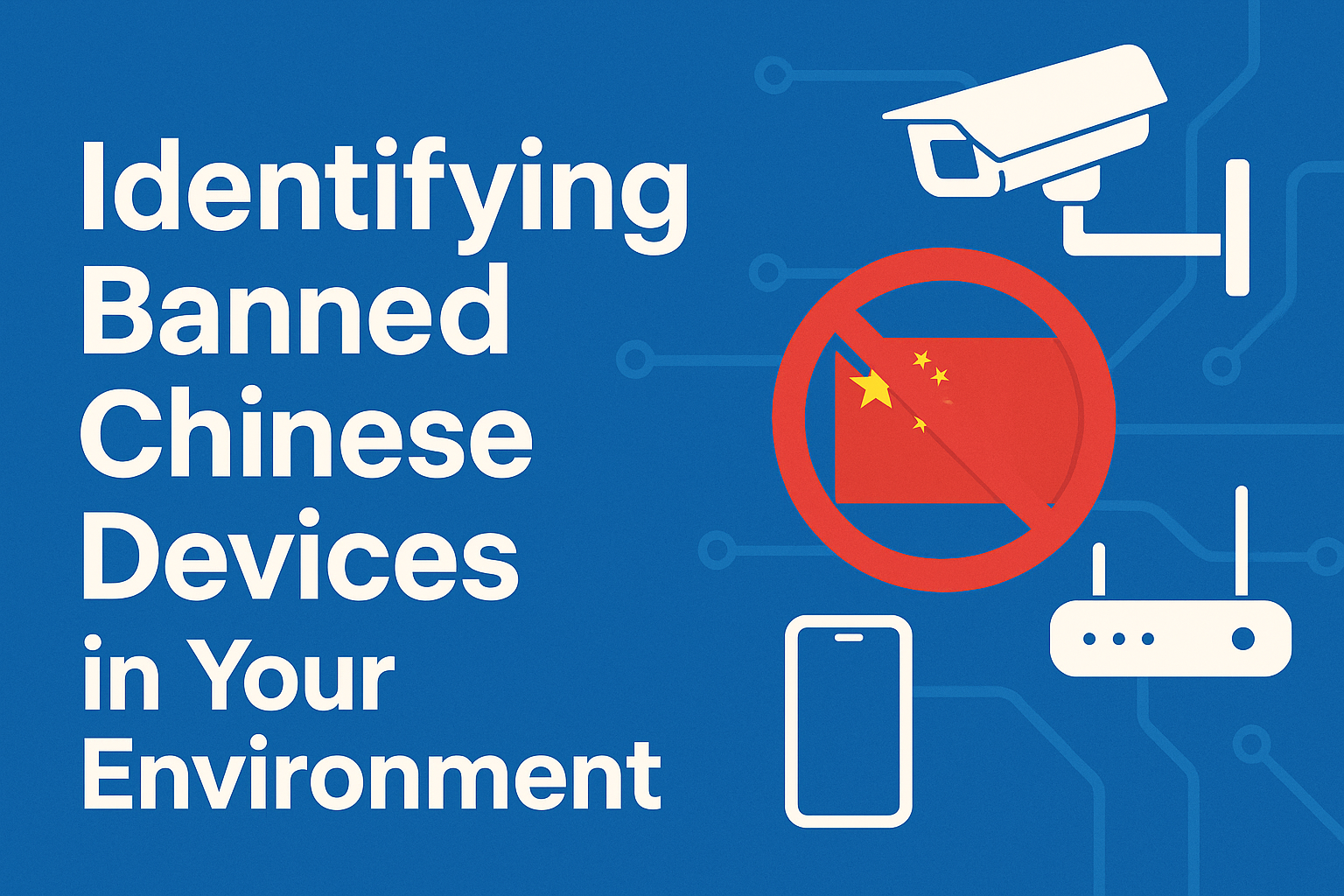
Hard to identify prohibited or restricted devices.

The Phosphorus solution

Discovery must move beyond passive visibility

01

Get complete visibility

Phosphorus actively discovers and accurately classifies all xIoT devices through direct communication using native protocols. Instead of relying on passive traffic observation or OUI guesswork, the platform engages devices directly to validate identity, model, manufacturer, firmware, and configuration details — delivering complete, high-resolution visibility across your entire environment.

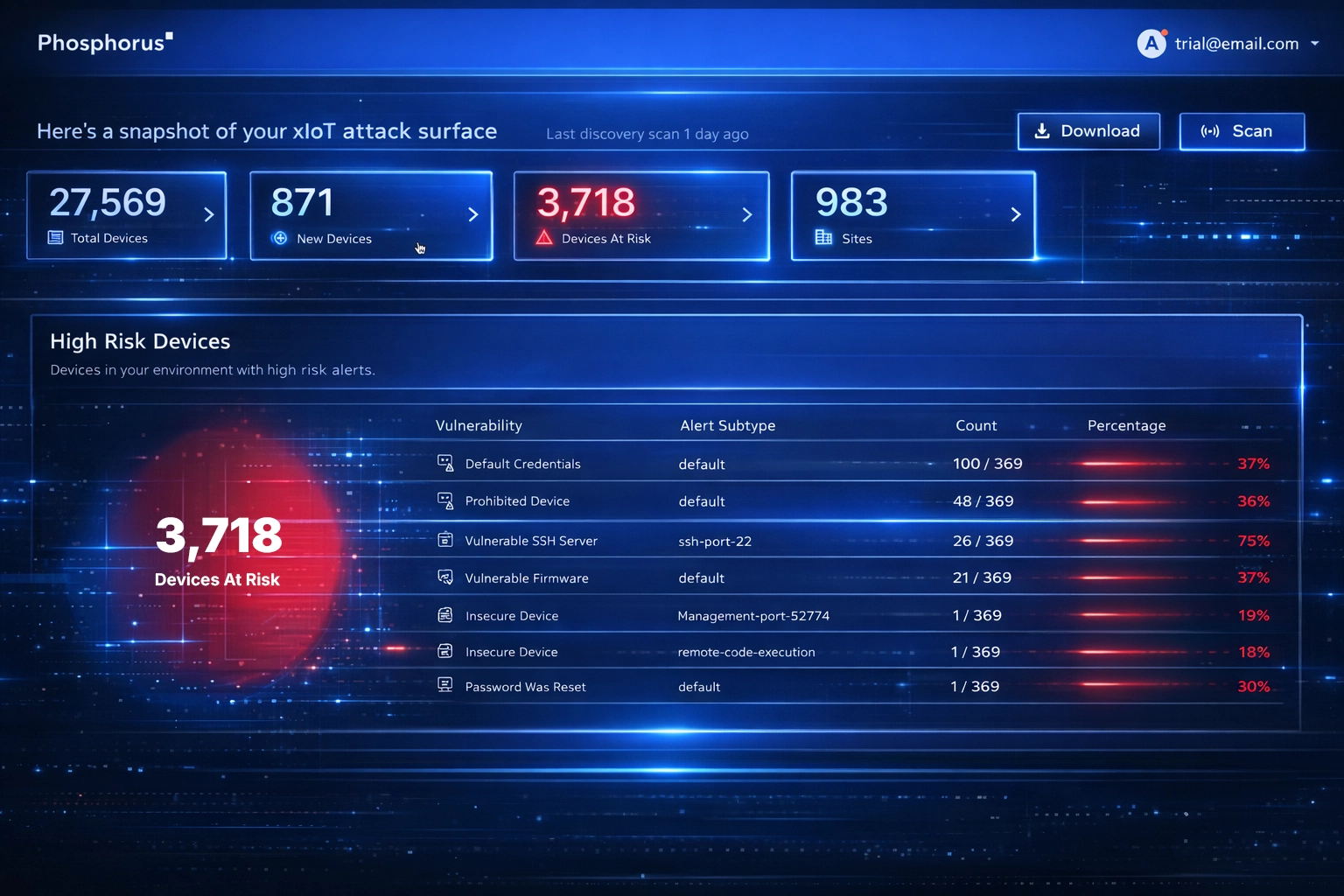
Phosphorus dashboard
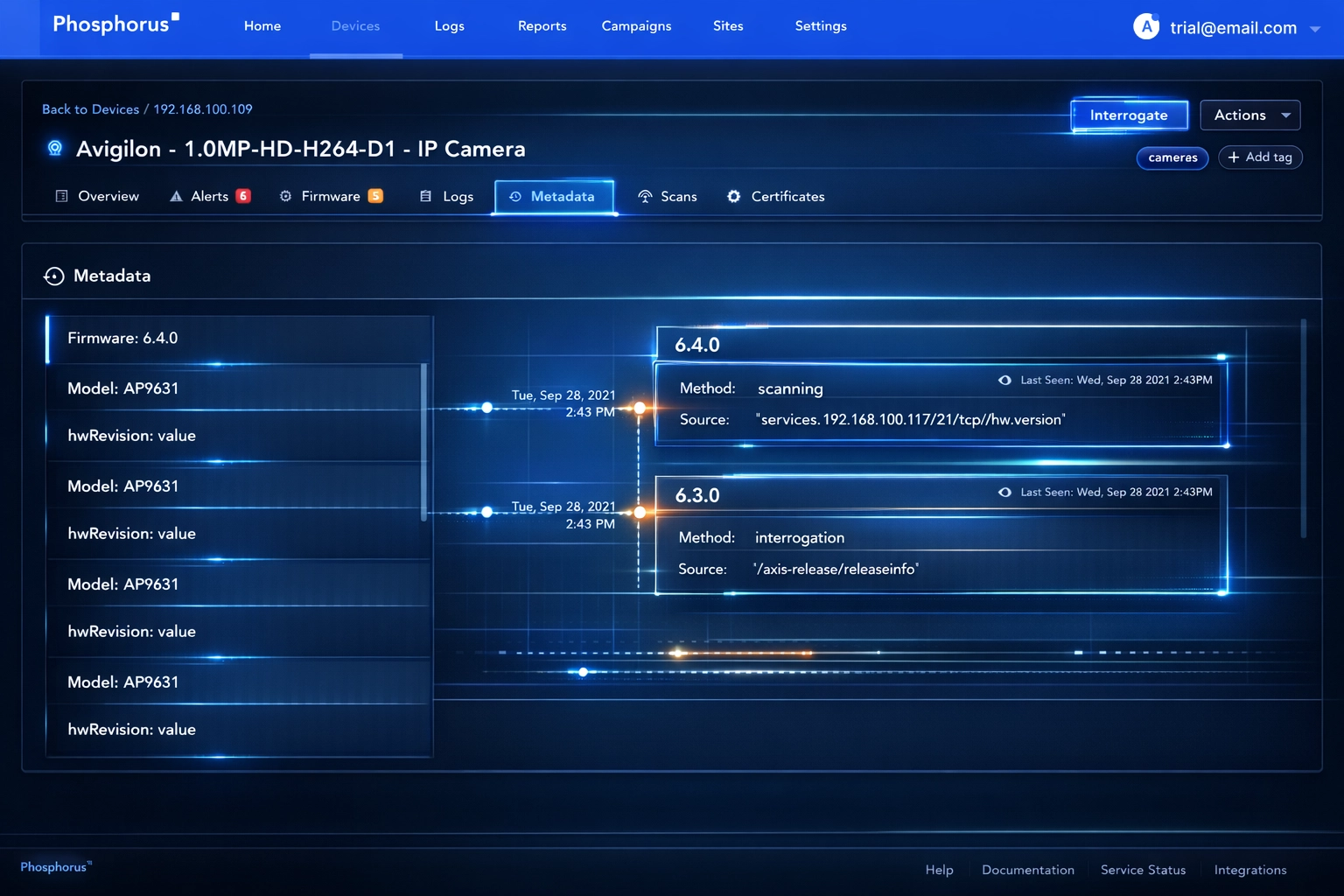
Phosphorus device provenance view

02

Gain deep device insights

Phosphorus delivers high-resolution device metadata by directly interrogating xIoT devices and extracting authoritative details at the source — including device type, manufacturer, model, firmware version, configuration attributes, and active protocols. By communicating natively with each device instead of relying on inferred traffic, the platform provides precise identification and deep visibility without agents, hardware sensors, or network disruption.

03

Zero disruption

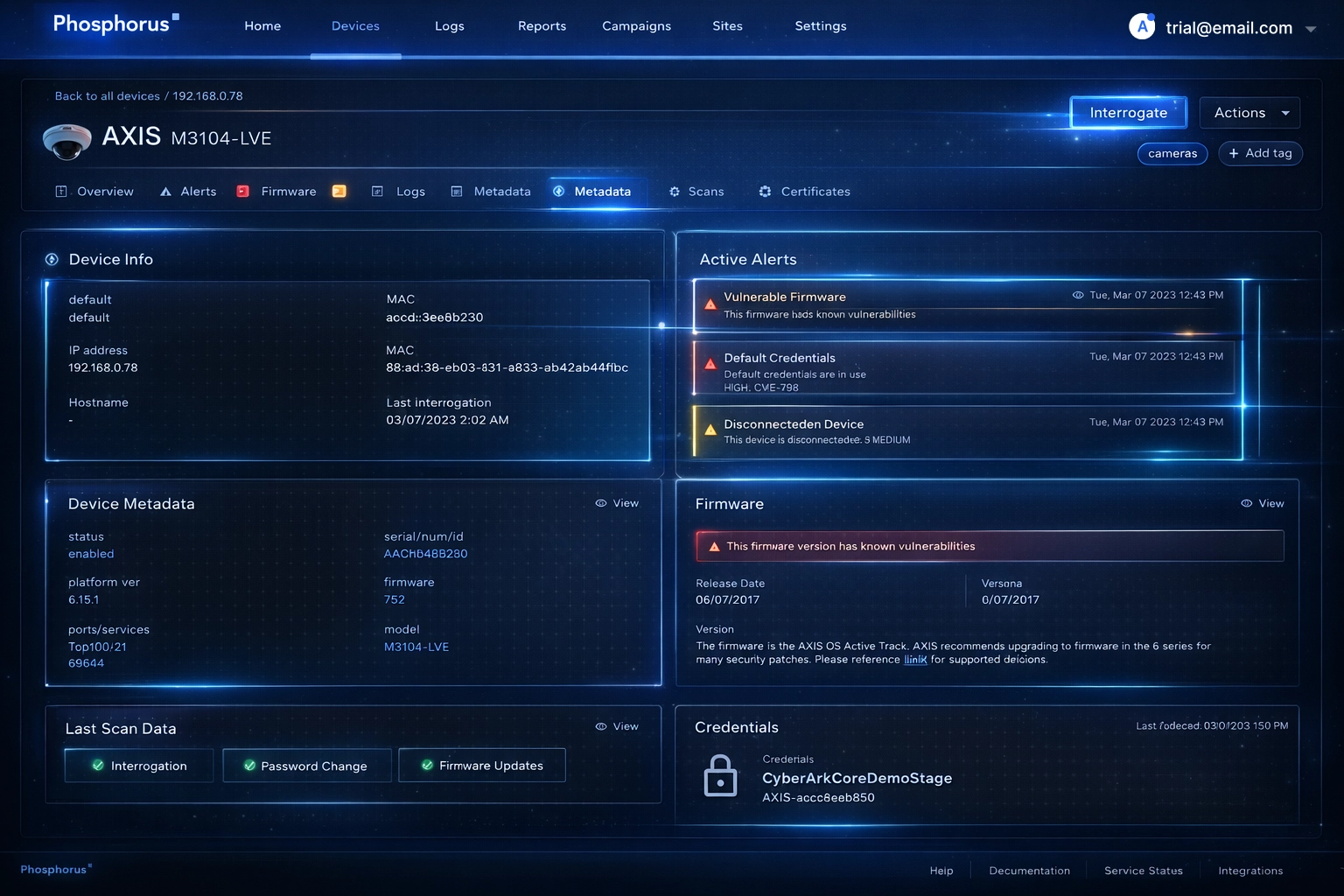
Phosphorus uses a non-disruptive, purpose-built approach to identify and fingerprint IoT, OT, IoMT, and IIoT devices without relying on fragile network monitoring or intrusive scanning. Designed for sensitive cyber-physical environments, it delivers deep visibility and accurate classification while ensuring production systems and critical infrastructure remain fully operational — with no downtime, latency, or operational risk.

Zero Disruption UI

Not all discovery is equal

From observation to verified device intelligence

Passive discovery
Phosphorus - active discovery
Traffic observation Devices get missed
Direct device communication Safely find every device using native protocols
MAC/OUI guesswork Devices get misclassified
Verified device fingerprint Accurate device identification
Traffic analysis Not a true attack surface analysis. Backdoored firmware, default credentials, expired certificates, and device misconfigurations get missed.
Device-level analysis Uncovers firmware CVEs (KEV + EPSS), NDAA Section 889 firmware origin, default passwords, expired/self-signed certs, End-of-Support devices, and deep misconfigurations.
Segmentation issues Unauthorized xIoT devices are often found in production VLANs
Device-level intelligence High-resolution device detail with granular risk posture assessment and deep device metadata.

Sources

Are you ready to see
Phosphorus in action?

Request a demo to learn how we can help you eliminate the xIoT security gap with the only IoT, OT, and IoMT discovery and remediation platform.